Does Creatine Cause Weight Gain or Water Retention?
Creatine can nudge the scale up early on — but the research shows it's mostly water inside muscle cells, not fat or subcutaneous bloat. Here's the honest breakdown.
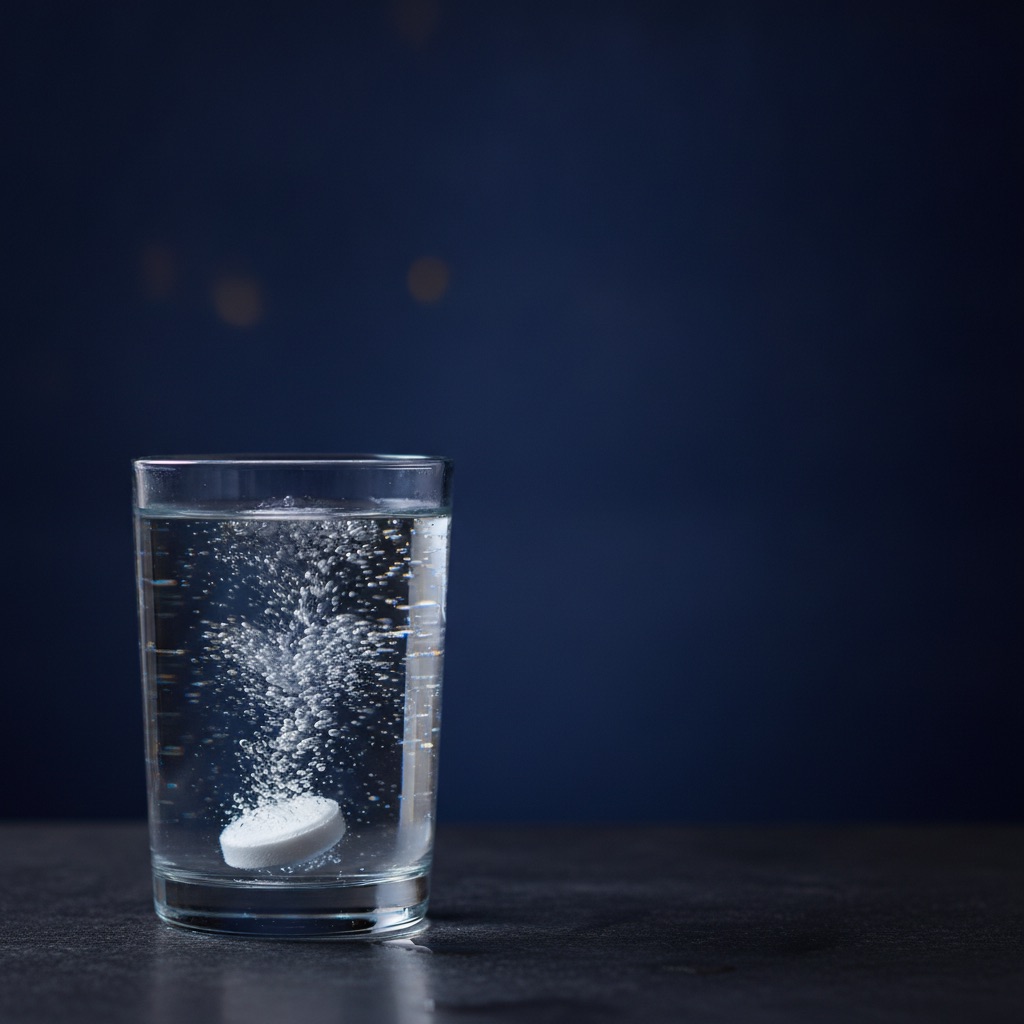
It’s one of the first things people notice after starting creatine: the scale ticks up a pound or two within the first week. That single observation fuels two of the most common worries — that creatine makes you “gain weight” and that it leaves you bloated. The honest answer is more interesting than either fear. Let’s look at what the controlled research actually shows about creatine weight gain and water retention.
Does creatine make you gain weight?
Short answer: the scale can go up, but not because you’re adding fat. Creatine has no calories and doesn’t act like a fat-storage hormone. What it does is draw water into your muscle cells, and water has weight. Initial loading studies report a short-term increase of roughly 0.5 to 1.0 liters of total body water in the first several days, which often shows up as about 1–2 kg on the scale.
So yes, creatine can make you “gain weight” in the most literal scale sense. But calling it weight gain in the way people usually mean — added fat — is inaccurate.
Creatine water retention: where the water actually goes
This is the part that gets lost in gym lore. The water creatine pulls in is intracellular — inside the muscle fibers — not the subcutaneous fluid that sits under your skin and reads as puffy “bloat.” That distinction matters because intramuscular water is associated with the muscle cell volume that supports training, not a layer of softness on top of it.
Both total and intracellular body water rose versus placebo, consistent with water entering muscle cells.
Source: J Int Soc Sports Nutr review (2021), citing Powers et al.
The 2021 ISSN-affiliated review concludes that early retention is “primarily attributed to increases in intracellular volume” — and, importantly, that over longer periods several studies show no change in total body water relative to muscle mass.
Does creatine cause bloating?
The bloating fear is mostly a misread of the loading phase. When people slam ~20 g/day for the first week, the rapid intracellular water shift is fastest and most noticeable. Because that water lives inside muscle rather than under the skin, it isn’t the gassy or puffy abdominal bloat the word usually conjures — though individual short-term scale increases of about 1–2 kg are real and do happen.
If the early jump bothers you, you can skip loading entirely. Taking a steady 5 g/day without a loading phase reaches the same muscle saturation over a few weeks, just more gradually — so the scale change is spread out rather than front-loaded.
Will the water weight go away — and what about real muscle?
Here’s the nuance the honest version requires. The big, fast water gain is tied to the optional loading protocol. Longer studies — for example 20 g/day for 7 days followed by 5 g/day for 21–28 days — found no significant change in intracellular, extracellular, or total body water by the end. In other words, the dramatic early reading settles down relative to the muscle you’re carrying.
Over time, part of the weight on the scale can reflect genuine lean tissue, not just water. Combined with resistance training, creatine is well-supported for modest gains in lean mass — one meta-analysis in older adults found about +1.37 kg of lean tissue versus placebo.
The bottom line
Creatine can move the scale — usually a pound or two early on — but the research points to water drawn inside muscle cells, not fat and not the puffy subcutaneous bloat people picture. That early water gain is largely a loading-phase phenomenon that normalizes relative to muscle mass over time, and with training, part of your eventual weight reflects real lean tissue. Vantra keeps it simple with a steady 5 g/day of creatine monohydrate (Creapure), split into Dawn (AM, citrus) and Dusk (PM, wild berry) — a maintenance dose with no loading phase, so any change tends to be gradual rather than a sudden scale spike.
Frequently asked questions
Does creatine make you gain weight?
It can nudge the scale up early — often about 1–2 kg in the first days. Research attributes this mainly to water drawn into muscle cells, not body fat. Creatine has no calories and does not directly add fat.
Is creatine weight gain just water?
Early on, largely yes. Loading studies report a short-term gain of about 0.5–1.0 L of total body water, mostly intracellular. Over longer use with training, some of the added weight reflects gains in lean tissue mass.
Does creatine cause bloating?
The water creatine pulls in sits inside muscle cells, not under the skin, so it isn't the puffy subcutaneous 'bloat' people fear. Some people do notice ~1–2 kg of early scale weight, which tends to normalize relative to muscle mass.
Will the water weight go away?
Longer studies (e.g., 20 g/day then 5 g/day for 21–28 days) found no significant change in total body water relative to muscle mass. The big early jump is the optional loading phase; skipping loading makes the change more gradual.
References
- Common questions and misconceptions about creatine supplementation: what does the scientific evidence really show?
- International Society of Sports Nutrition position stand: safety and efficacy of creatine supplementation in exercise, sport, and medicine
- Effect of creatine supplementation during resistance training on lean tissue mass and muscular strength in older adults: a meta-analysis
Make creatine a daily ritual.
Shop Vantra